

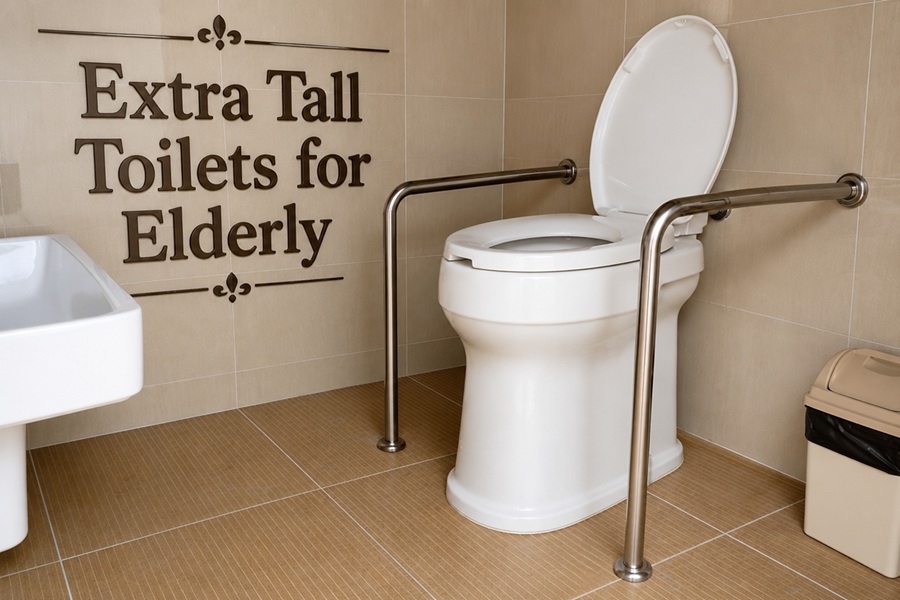
For many elderly people, using a standard toilet can become harder with age. Sitting down may put pressure on the knees, hips, and lower back, while standing up can require more strength and balance than it used to. A toilet that once felt normal may suddenly feel too low.
That is where extra tall toilets can help. Also called comfort height toilets, chair height toilets, or simply tall toilets, these models have a higher seat than standard toilets. The extra height reduces the distance a person has to lower themselves and rise back up, making bathroom use easier, safer, and more comfortable.
For seniors, people with arthritis, joint pain, limited mobility, or balance concerns, a taller toilet can be a practical upgrade. It is also a common feature in bathrooms designed for aging in place.
What Is an Extra Tall Toilet?
An extra tall toilet is a toilet with a higher bowl and seat than a standard model. A traditional toilet is often lower, which may be fine for children or shorter adults, but it can be uncomfortable for elderly users.
A taller toilet is designed to feel closer to sitting on a chair. This makes it easier to bend less at the knees and hips when sitting down or standing up.
There are generally three height categories:
| Toilet Type | General Height | Best For |
|---|---|---|
| Standard height | Lower than chair height | Children, shorter users, general use |
| Comfort height / chair height | Similar to a chair | Most adults and many seniors |
| Extra tall toilet | Higher than comfort height | Taller users or people with greater mobility needs |
Comfort height toilets are the most common option for seniors, but extra tall models may be better for some users depending on their height, strength, and mobility.
How a Taller Toilet Helps Elderly Users
The biggest benefit of a taller toilet is simple: it makes sitting and standing easier.
When a toilet is too low, the user has to bend more deeply. This can be painful for someone with stiff knees, weak legs, hip problems, arthritis, or limited balance. Standing up from a low toilet can also increase the risk of slipping or losing balance.
A taller toilet can help by:
- Reducing strain on the knees and hips
- Making it easier to sit down and stand up
- Supporting better balance during use
- Improving comfort for taller adults
- Helping elderly users maintain independence
- Making the bathroom safer for aging in place
For many seniors, small changes in bathroom design can make a big difference. A higher toilet may not seem like a major upgrade, but it can improve one of the most important daily routines.
Comfort Height vs. Extra Tall Toilets
The terms “comfort height” and “extra tall” are often used together, but they are not always the same.
A comfort height toilet is usually designed to be close to the height of a standard chair. This height works well for many adults because it requires less bending than a traditional toilet.
An extra tall toilet goes even higher. These models may be useful for taller people or users who have more difficulty lowering themselves. However, taller is not always better for everyone. A toilet that is too high can leave the user’s feet unsupported, which may feel uncomfortable or unstable.
The right choice depends on the person who will use it most. If possible, compare toilet heights in person or measure a chair height that feels comfortable at home. The goal is to find a height that makes sitting and standing easier without making the user feel off balance.
Important Features to Look For
Height is important, but it is not the only thing to consider. A good toilet for an elderly person should also be comfortable, stable, and easy to use.
1. Elongated Bowl
An elongated bowl is longer from front to back than a round bowl. Many adults find it more comfortable, especially for daily use. If the bathroom has enough space, an elongated bowl is usually a good choice for seniors.
A round bowl may still work better in a small bathroom where space is limited.
2. Easy-to-Use Flush
Look for a flush handle or button that is simple to operate. Large side levers are often easier for seniors than small or stiff buttons. If the user has arthritis or limited hand strength, this detail matters.
3. Stable Seat
The toilet seat should feel secure and not shift during use. A slow-close seat can also be helpful because it prevents slamming and is easier to manage.
Some people may benefit from a padded or raised toilet seat, but these should be chosen carefully to make sure they are stable and safe.
4. Strong Flush Performance
A toilet for an elderly user should be reliable and easy to maintain. Choose a model with good flushing performance to reduce clogs and avoid unnecessary maintenance.
5. Proper Bathroom Fit
Before buying, check the bathroom layout. Make sure the toilet fits the rough-in measurement, has enough space around it, and does not interfere with doors, cabinets, or walkers.
The most common rough-in size is 12 inches, but some bathrooms may require a 10-inch or 14-inch rough-in toilet.
Why Grab Bars Are Just as Important
A taller toilet can help, but it works best when paired with good bathroom safety features. One of the most important additions is a set of grab bars near the toilet.
Grab bars give the user something sturdy to hold when sitting down or standing up. This can reduce the risk of falls and provide extra confidence, especially for someone with balance issues.
Grab bars should be securely installed into wall studs or with proper anchors. Towel bars should not be used as grab bars because they are not designed to support body weight.
Good places for grab bars include:
- Beside the toilet
- Behind the toilet
- Along the nearby wall
- Near the shower or bathtub
For some users, a toilet safety frame or rails around the toilet may also be helpful.
Other Bathroom Safety Tips for Seniors
A taller toilet is only one part of a safer bathroom. Since bathrooms can be slippery and cramped, it is worth looking at the whole space.
Helpful upgrades include:
- Non-slip flooring or bath mats
- Bright lighting
- Clear walking paths
- Night lights for late-night use
- A handheld showerhead
- A walk-in shower if possible
- A shower chair or bench
- Lever-style faucets
- Easy-to-reach toilet paper holder
The goal is to reduce bending, reaching, slipping, and unnecessary effort. A bathroom that is easy to move around in can help seniors feel more confident and independent.
Raised Toilet Seats as an Alternative
If replacing the toilet is not possible, a raised toilet seat can be a lower-cost alternative. These seats attach to the existing toilet and add extra height.
Raised toilet seats can be helpful after surgery, during recovery, or when a full toilet replacement is not in the budget. Some models also include side handles for added support.
However, they are not always as stable or attractive as a properly installed tall toilet. They also need to fit securely. If the seat shifts or feels loose, it can become a safety concern.
A raised toilet seat may be a good temporary solution, while a comfort height or extra tall toilet may be better for long-term use.
Who Should Consider an Extra Tall Toilet?
An extra tall toilet may be helpful for:
- Elderly adults
- People with arthritis
- Users with knee, hip, or back pain
- Taller adults
- People recovering from surgery
- Anyone with limited mobility
- Homes designed for aging in place
However, it may not be ideal for everyone. Shorter users or children may find an extra tall toilet uncomfortable. If multiple people use the bathroom, comfort height may be a better compromise than an extremely tall model.
For users with specific medical needs, it may be helpful to ask a doctor, physical therapist, or occupational therapist for guidance. They can recommend the safest height and support features based on the person’s mobility and balance.
How to Choose the Right Tall Toilet
When choosing an extra tall toilet for an elderly person, focus on the user’s comfort and safety rather than height alone.
Start by asking:
- Can the person sit down without dropping too low?
- Can they stand up without struggling?
- Do their feet rest comfortably on the floor?
- Is there enough room for a walker or caregiver if needed?
- Will grab bars or safety rails be installed nearby?
- Is the flush easy to reach and use?
- Does the toilet fit the bathroom’s plumbing and layout?
If possible, test different seat heights. Sitting on a chair at a similar height can help you decide what feels best. A toilet that is too low can be difficult, but one that is too high may also cause discomfort.
Frequently Asked Questions
What is the best toilet height for elderly people?
Many elderly users are most comfortable with a comfort height toilet, which is close to chair height. Some may need an extra tall toilet, especially if they are taller or have more mobility challenges. The best height depends on the individual.
Are extra tall toilets safer for seniors?
They can be safer for many seniors because they reduce the effort needed to sit and stand. For the best safety, pair the toilet with grab bars, good lighting, and non-slip flooring.
What is the difference between comfort height and standard height?
Standard toilets are lower, while comfort height toilets are taller and closer to the height of a chair. Comfort height models are often easier for adults and seniors to use.
Should I install grab bars with a tall toilet?
Yes, grab bars are strongly recommended for seniors or anyone with balance or mobility concerns. They add support and make sitting and standing safer.
Can I make my current toilet taller?
Yes. A raised toilet seat or toilet riser can add height to an existing toilet. This can be a good temporary or budget-friendly option, but it must be installed securely.
Final Thoughts
Extra tall toilets can make the bathroom more comfortable and safer for elderly users. By raising the seat height, they reduce strain on the knees, hips, and joints, making it easier to sit down and stand up.
For many seniors, a comfort height toilet is enough. Others may benefit from an extra tall model, especially if they are tall or have more serious mobility challenges. The best choice depends on the individual’s height, strength, balance, and comfort.
To create the safest setup, pair a taller toilet with grab bars, good lighting, non-slip flooring, and enough space to move comfortably. If there are medical or mobility concerns, professional advice can help you choose the right height and support features.
A taller toilet is a simple bathroom upgrade, but for an elderly person, it can make daily life easier, safer, and more independent.