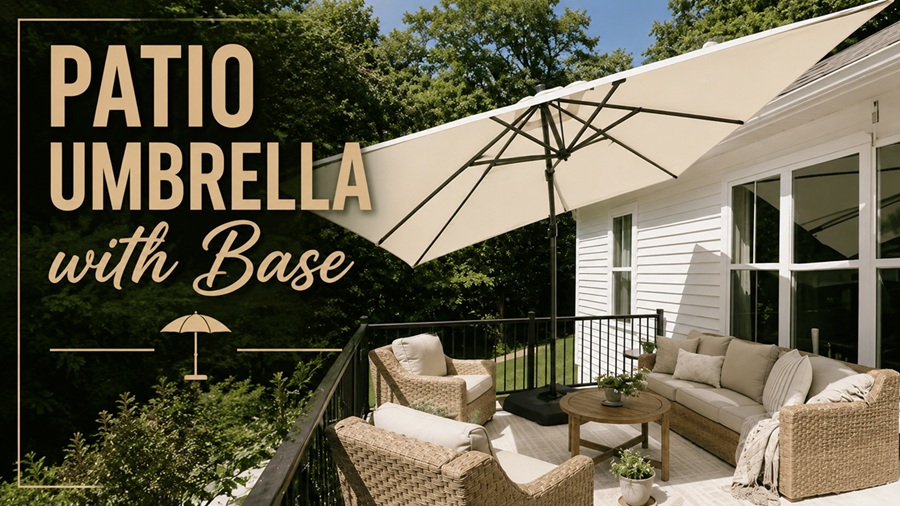
Tag: umbrella stand

  • Patio Umbrella With Base: How to Choose the Right Setup

    Patio Umbrella With Base: How to Choose the Right Setup

    A patio umbrella with base is a complete shade setup pairing an umbrella with a weighted stand that holds it upright and stable, and choosing well means matching a properly sized, heavy-enough base to your umbrella so it stays secure, especially in wind. The base is not an afterthought; it is what keeps the whole umbrella from tipping or blowing over, so its weight and size must suit the umbrella’s dimensions and how it is set up, whether freestanding or used with a table. Getting the right umbrella for your space and the right base to anchor it gives you reliable, safe shade for your patio, while an undersized or mismatched base is the most common reason umbrellas topple. Understanding how to pair the two is the key to a stable, lasting setup.

    A patio umbrella is one of the simplest ways to add shade and comfort to an outdoor space, but it is only as good as the base holding it up. Many people focus on the umbrella and overlook the base, then wonder why it tips in a breeze. This guide explains how to choose a patio umbrella with the right base, why base weight and size matter so much, the umbrella types available, and tips for a safe, stable, shady setup.

    What it is An umbrella paired with a weighted stand
    Base’s job Holds the umbrella upright and stable
    Key to stability A base sized and weighted for the umbrella
    Main risk Tipping or blowing over in wind
    Base weight Must suit the umbrella size and setup
    Setups Freestanding or used with a table
    Umbrella types Market, cantilever, and more
    Goal Reliable, safe shade for your patio

    Why the Base Matters So Much

    It is easy to think of the base as a minor accessory, but it is arguably the most important part of a stable patio umbrella setup. The base provides the weight and support that keep the umbrella standing upright and prevent it from tipping or blowing over, which is a real hazard given how much wind a large umbrella canopy catches. An umbrella acts like a sail, so without a heavy enough base to anchor it, even a moderate breeze can send it toppling.

    This is why a mismatched or undersized base is the single most common reason patio umbrellas fail, tipping over, damaging themselves or surroundings, and even posing a safety risk. Choosing a base that is properly sized and heavy enough for your umbrella is what makes the whole setup reliable and safe. In short, a great umbrella with an inadequate base is a poor setup, while the right base makes all the difference.

    Sizing the Base to the Umbrella

    The heart of a good setup is matching the base weight and size to your umbrella, since a larger umbrella needs a heavier base to stay stable. As a general principle, the bigger the umbrella canopy, the more base weight is required to anchor it, and manufacturers usually provide guidance on the recommended base weight for a given umbrella size.

    • Larger umbrellas require heavier bases to stay stable
    • Follow the manufacturer’s recommended base weight for your umbrella size
    • Err on the side of a heavier base, especially in breezy areas
    • A table-mounted umbrella can use a lighter base than a freestanding one
    • Freestanding umbrellas need more base weight since the base alone holds them
    • Match the base type to how you are using the umbrella

    Freestanding vs Table Setups

    How you use the umbrella affects the base you need, and there are two common setups. When an umbrella goes through a hole in a patio table, the table itself helps stabilize the umbrella, so the base primarily anchors the pole and can often be somewhat lighter, since the table shares the job. When an umbrella stands freely without a table, the base alone must hold it upright and stable, so it needs to be heavier to do the whole job. Recognizing which setup you have is important for choosing an adequate base, since a base that is fine with a supporting table may be dangerously light for the same umbrella standing on its own. Always account for whether the umbrella is table-supported or fully freestanding.

    Types of Patio Umbrellas

    Patio umbrellas come in a few main types, and the type affects both the shade it provides and the base it requires. Knowing the options helps you choose the right umbrella for your space.

    Type Description Base Consideration
    Market umbrella Classic center-pole umbrella Often used with a table or a base
    Cantilever / offset Pole to the side, canopy overhangs Needs a heavy or weighted base
    Table umbrella Fits through a patio table hole Table aids stability
    Half / wall umbrella Flat side against a wall Suited to tight spaces

    Cantilever umbrellas, which position the pole to the side so the canopy floats over your space unobstructed, are especially reliant on a very stable, heavy base or weights, since the offset design requires strong anchoring.

    Choosing the Right Umbrella

    Beyond the base, choosing the umbrella itself involves matching it to your space and needs. Consider the size of the area you want to shade, since the umbrella canopy should be large enough to cover your seating or table with some overhang. Think about the type that suits your layout, a market umbrella for a table, a cantilever to keep the pole out of the way, or a wall-style umbrella for tight spots. Look at the canopy material for durability and UV protection, and features like a tilt function to adjust for the sun’s angle and a crank or push mechanism for easy opening. Choosing an umbrella that fits your space and needs, then pairing it with an appropriate base, gives you a setup that provides great shade and lasts.

    Tips for a Safe, Stable Setup

    A few practical tips help ensure your patio umbrella stays safely upright and serves you well. Following these keeps your setup stable and prevents the common problem of a toppling umbrella.

    • Use a base heavy enough for your umbrella size, erring on the heavier side
    • Account for whether the umbrella is freestanding or supported by a table
    • Close the umbrella when it is not in use or when wind picks up
    • Never leave an open umbrella unattended in strong or gusty wind
    • Use the tilt and crank features properly to manage sun and wind
    • Store the umbrella properly in the off-season to extend its life

    Frequently Asked Questions

    What size base do I need for my patio umbrella?

    It depends on the umbrella size, with larger umbrellas needing heavier bases. Follow the manufacturer’s recommended base weight for your umbrella, and err on the heavier side, especially in windy areas or for freestanding umbrellas that the base alone must hold up.

    Why does my patio umbrella keep tipping over?

    Almost always because the base is too light or too small for the umbrella. An umbrella catches wind like a sail, so it needs a properly sized, heavy base to anchor it. Upgrading to an adequately heavy base, and closing it in wind, solves most tipping problems.

    Can I use a freestanding umbrella without a table?

    Yes, but it needs a heavier base, since without a table to help stabilize it, the base alone must hold the umbrella upright. A base that works with a supporting table may be too light for the same umbrella standing freely, so size the base for freestanding use.

    Do cantilever umbrellas need a special base?

    They need a very stable, heavy base or weights, because their offset design, with the pole to the side and the canopy overhanging, requires strong anchoring to stay upright. Cantilever umbrellas typically come with or specify a substantial base or weight system.

    What should I look for in a patio umbrella?

    Choose a canopy large enough to shade your seating or table with some overhang, a type that suits your layout, and a durable, UV-protective canopy material. Useful features include a tilt function for the sun’s angle and an easy crank or push mechanism, all paired with an adequate base.

    Final Thoughts

    A patio umbrella with the right base is the key to reliable, safe shade for your outdoor space, and the base deserves as much attention as the umbrella itself. Since the base is what keeps the umbrella from tipping or blowing over, matching its weight and size to your umbrella, and accounting for whether the umbrella is freestanding or table-supported, is essential. Choose an umbrella that fits your space and the shade you want, pair it with a properly sized, heavy-enough base, and follow safe-use habits like closing it in wind. Do that, and your patio umbrella will provide comfortable, stable shade season after season.